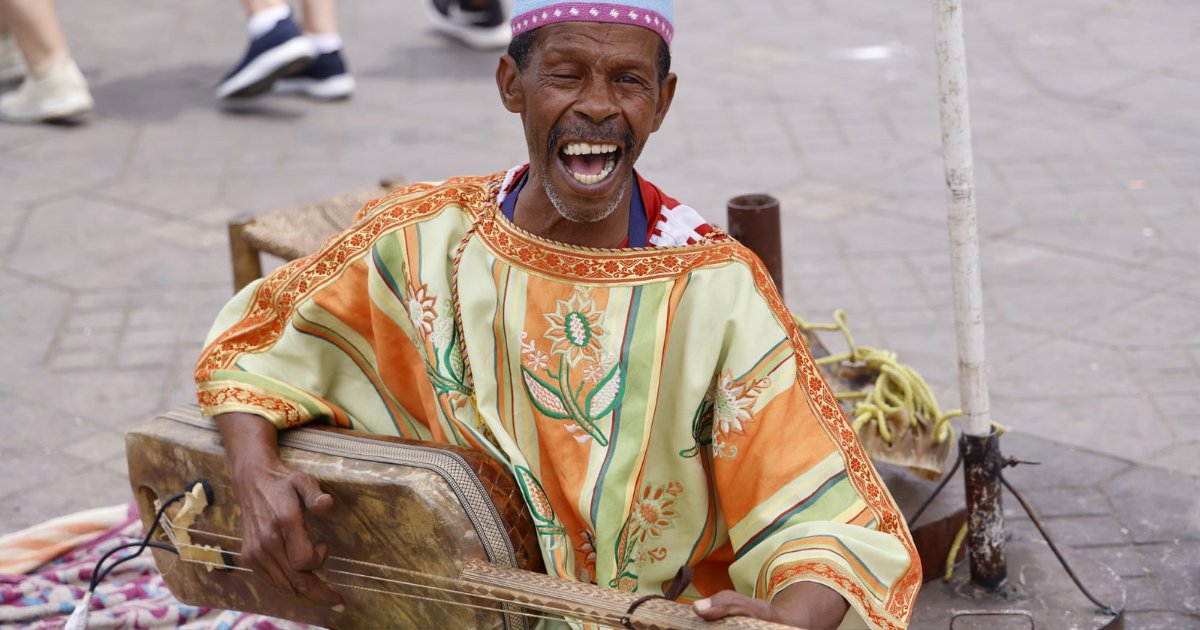
You'll hear it before you understand it: a low, hypnotic bassline, the metal clatter of iron castanets, voices rising and falling for hours. This is Gnawa — one of the most extraordinary musical traditions on earth.
Its roots run south, into West Africa, carried north centuries ago by enslaved people and woven over generations into something wholly Moroccan and wholly spiritual. A full Gnawa ceremony — a lila or derdeba — lasts all night, calling on the mlûk (the spirits), each with its own colour, incense and rhythm. It is not a concert. It is closer to healing.
The instruments
The guembri (also called the sintir or hajhouj) is the soul of it — a three-stringed bass lute carved from a single piece of wood, faced with camel skin, played with a deep, thumb-slapped groove that sits under everything. Around it the qraqeb — heavy iron castanets — keep a clattering, train-like pulse that tightens and accelerates as the night goes on, pulling the room toward trance. Add the big tbel drums and the call-and-response voices, and you have music built not to be watched but to be travelled through. Each spirit has its own rhythm, its own colour, its own incense; the master moves between them in an order only he carries in his head.
What "Maâlem" means
You'll see it before some musicians' names — Maâlem, or Mallem. It means master. Not a job title you print on a card, but an honour earned over decades and granted only by the agreement of other masters. A Maâlem leads the all-night ceremony, knows every song in its proper order, which incense belongs to which spirit, and how to carry a room from dusk to dawn without dropping the thread. As the tradition puts it, the Maâlem mediates between the seen and the unseen.
The festival
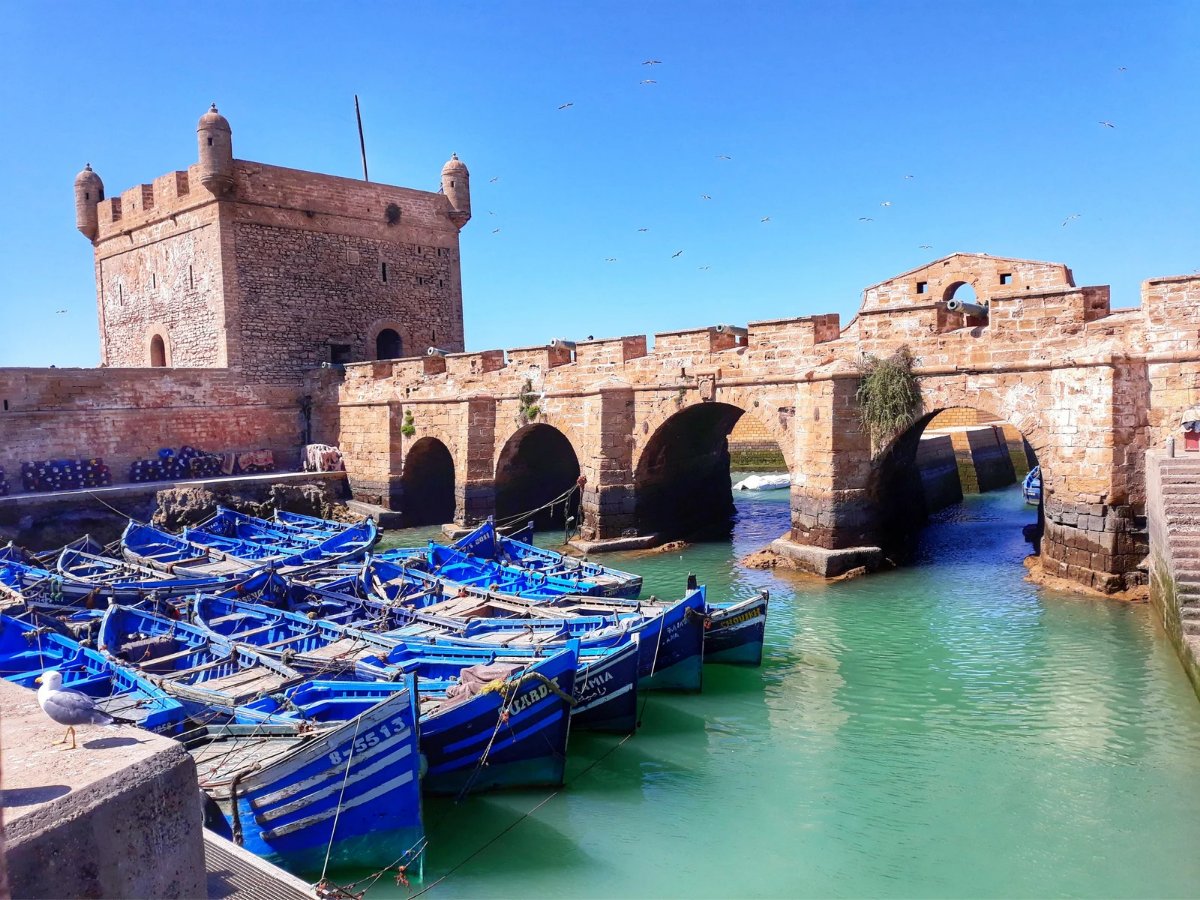
Once a year the white-and-blue port city of Essaouira gives itself over completely to this music. The Gnaoua World Music Festival, founded in 1998, fills the ramparts and squares for a few days each June — masters trading phrases with jazz, blues, rock and funk players from around the world, much of it free, crowds in the hundreds of thousands. In 2019, UNESCO recognised Gnawa itself as part of humanity's intangible cultural heritage. If you can time a trip to it, do — but book your hotel early.
Our friend Montari
The Gnawa Master in Welcome to Morocco — The Musical isn't invented. He's Maâlem Mohamed Montari — a real master, and our friend. (Find him on Instagram: @maalem_montari_gnawa.) We met him in Anza, playing in a café at dusk with his son, his skill matched only by the beauty of their handmade instruments. The whole place fell quiet — just the waves, his voice, and a beach full of people sipping mint tea in the half-light. It is one of those Moroccan evenings you don't plan and never forget.
Hear him for yourself — a reel from @maalem_montari_gnawa: